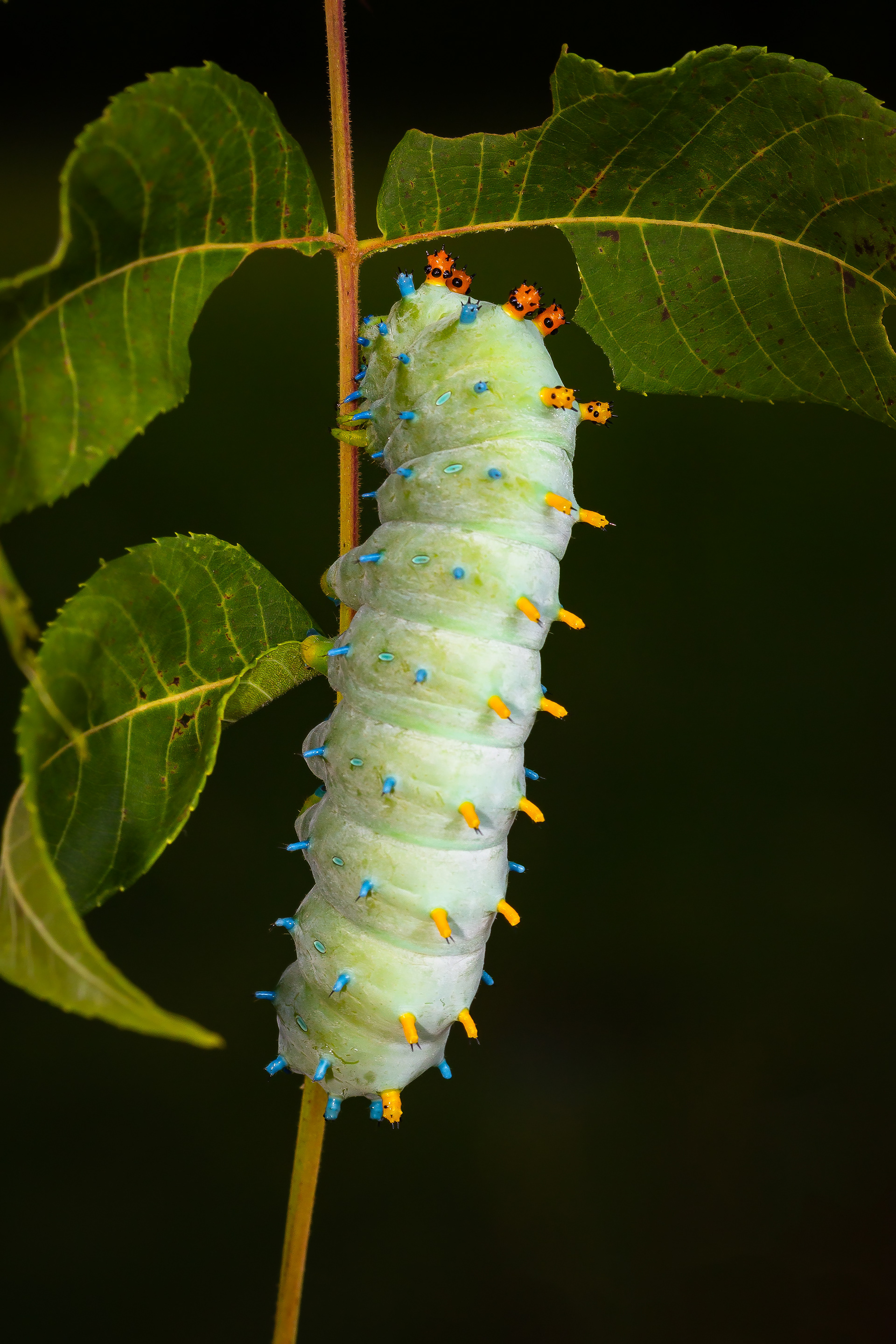
A Cecropia moth has no mouthparts and will never eat; its brief adult life is devoted entirely to mating and laying the next generation of eggs.
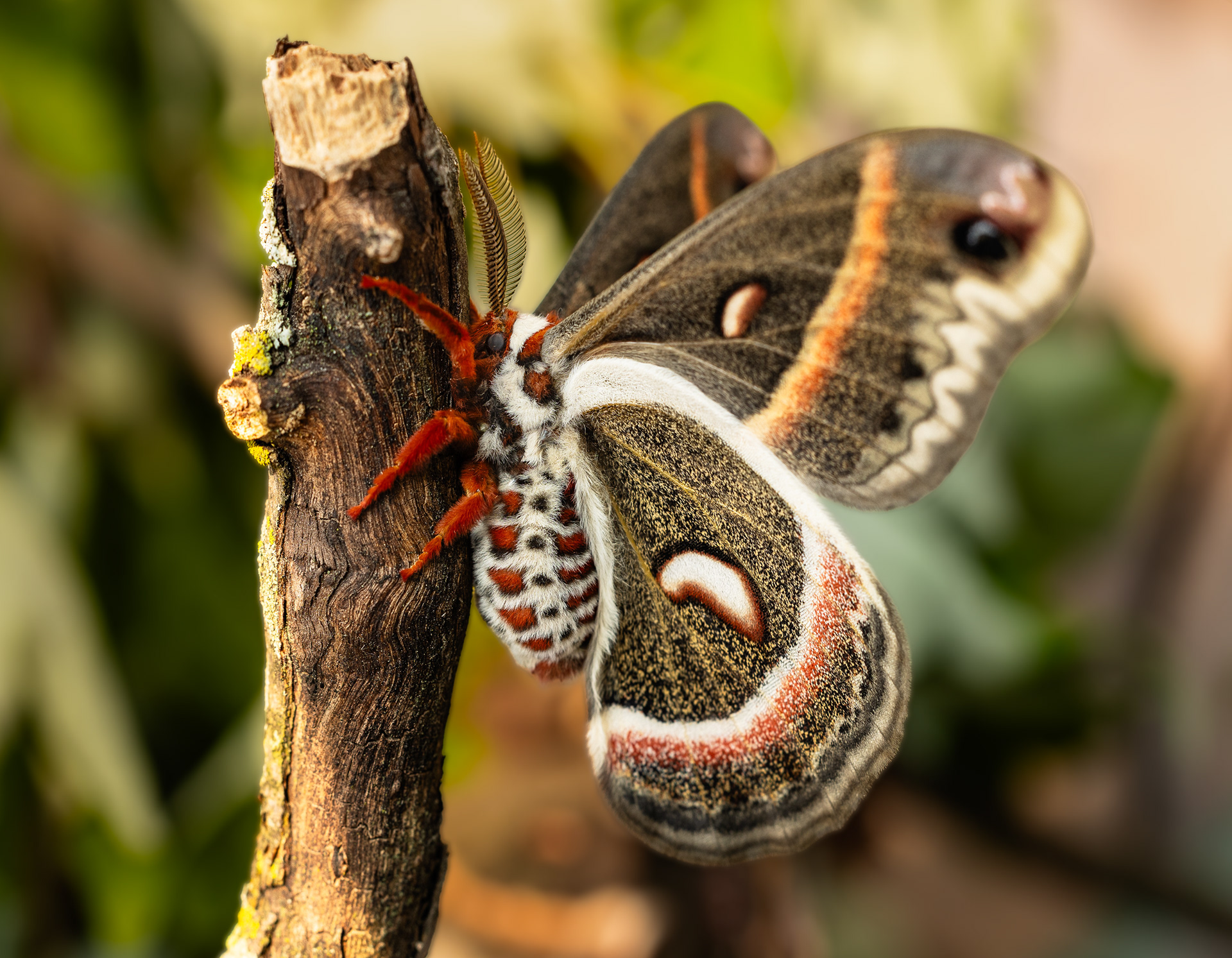
A top down view of a Cecropia moth beside a cocoon.
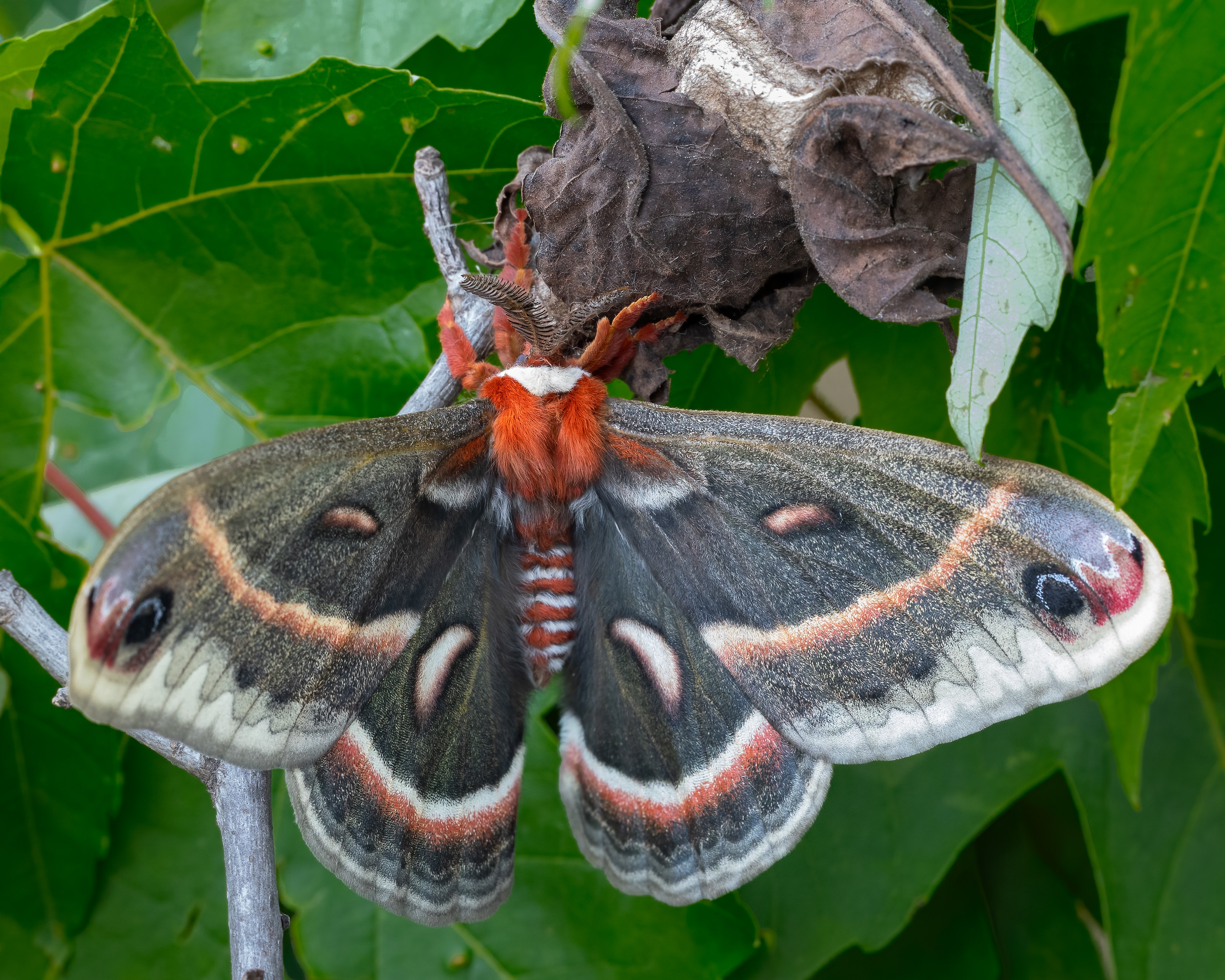
Hatched Cecropia eggs on a brown paper bag. Cecropia eggs are around 2mm long.
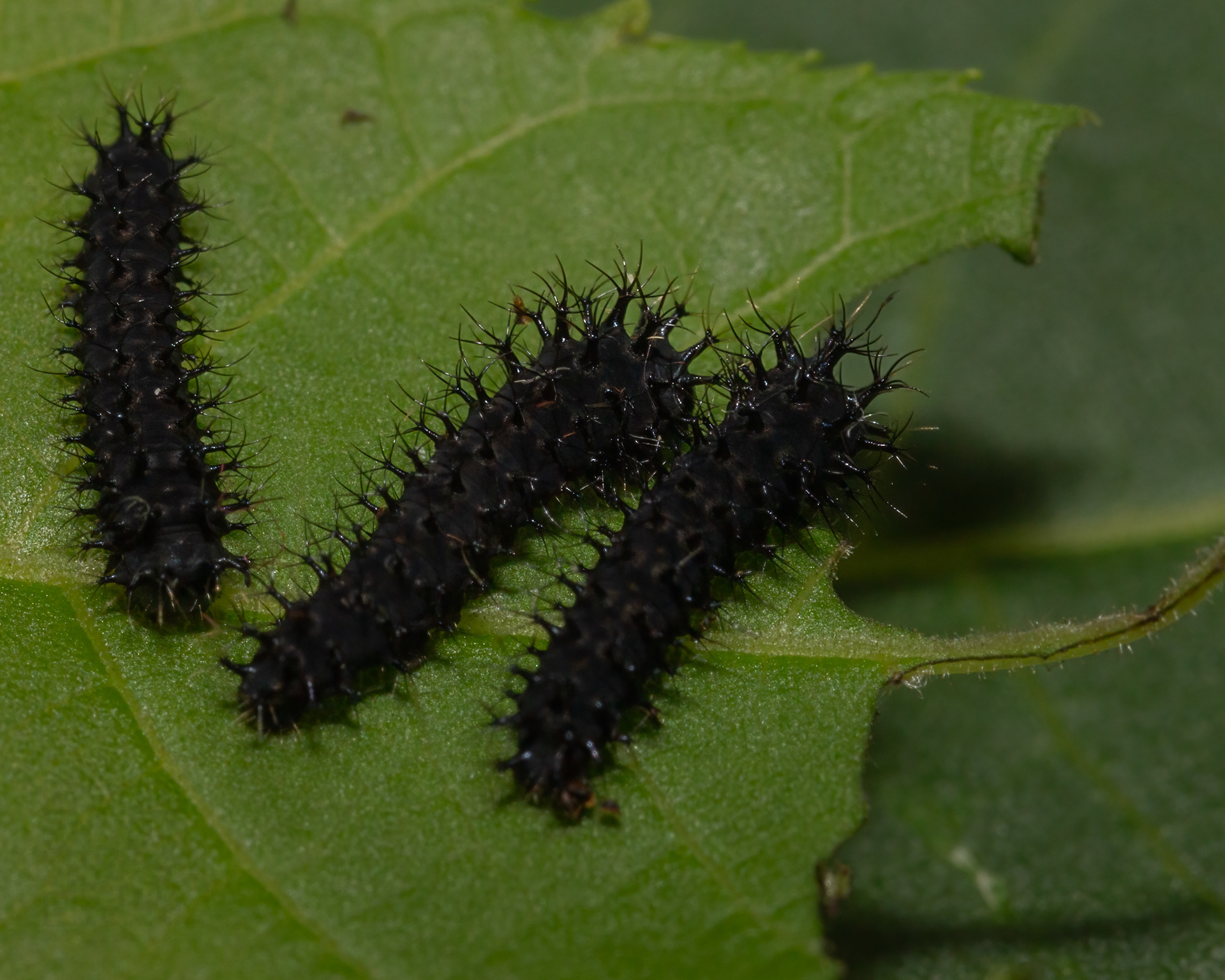
Instar 1 (mid May–mid June):
• Caterpillars are small, black, and spiny.
• They feed in groups, often staying close to the egg cluster.
• Movement is slow, but feeding is steady on tender new leaves.
• Caterpillars are small, black, and spiny.
• They feed in groups, often staying close to the egg cluster.
• Movement is slow, but feeding is steady on tender new leaves.
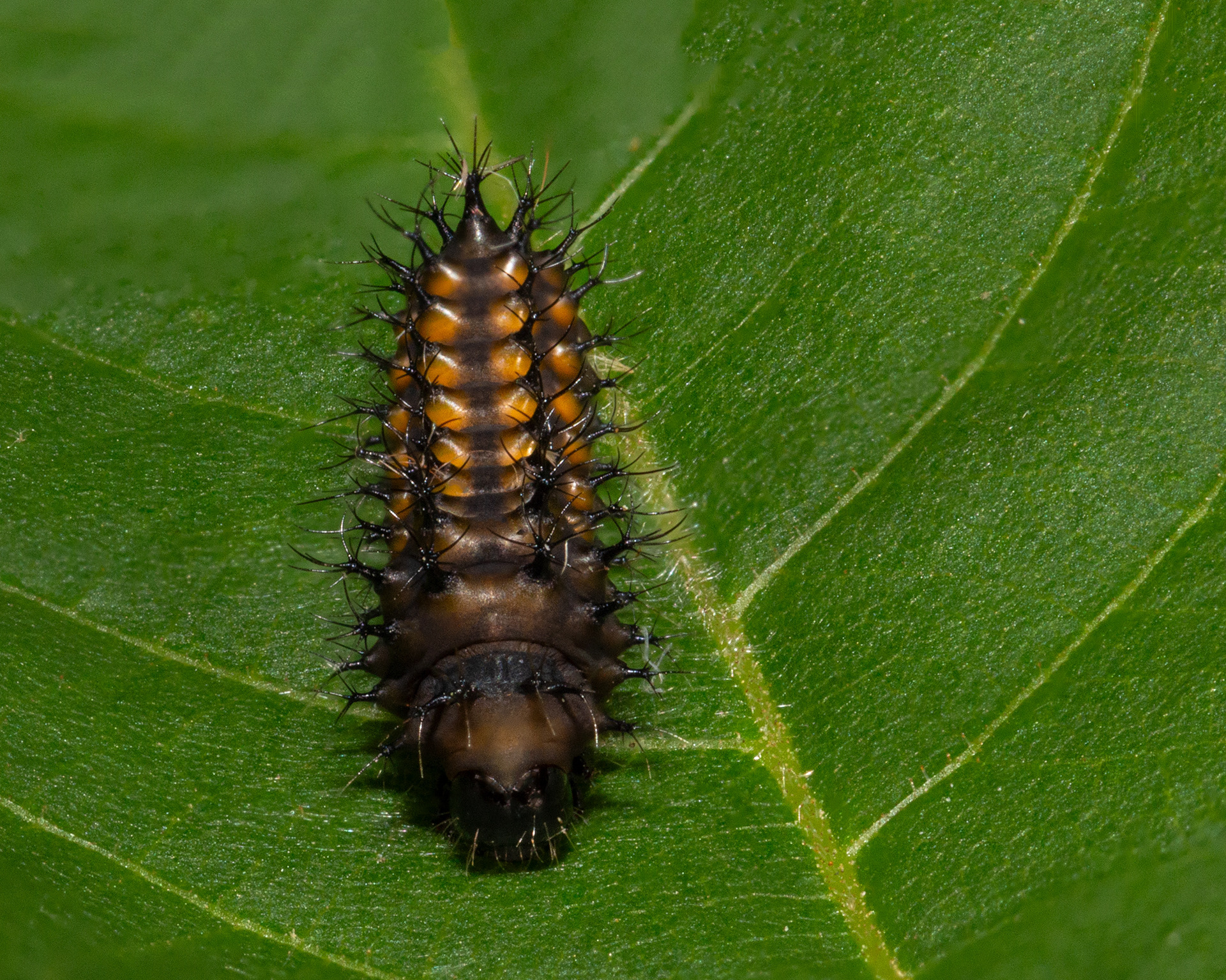
Instar 2 (expected mid June):
• Caterpillars will turn yellowish.
• They begin to spread out more, feeding independently.
• Caterpillars will turn yellowish.
• They begin to spread out more, feeding independently.
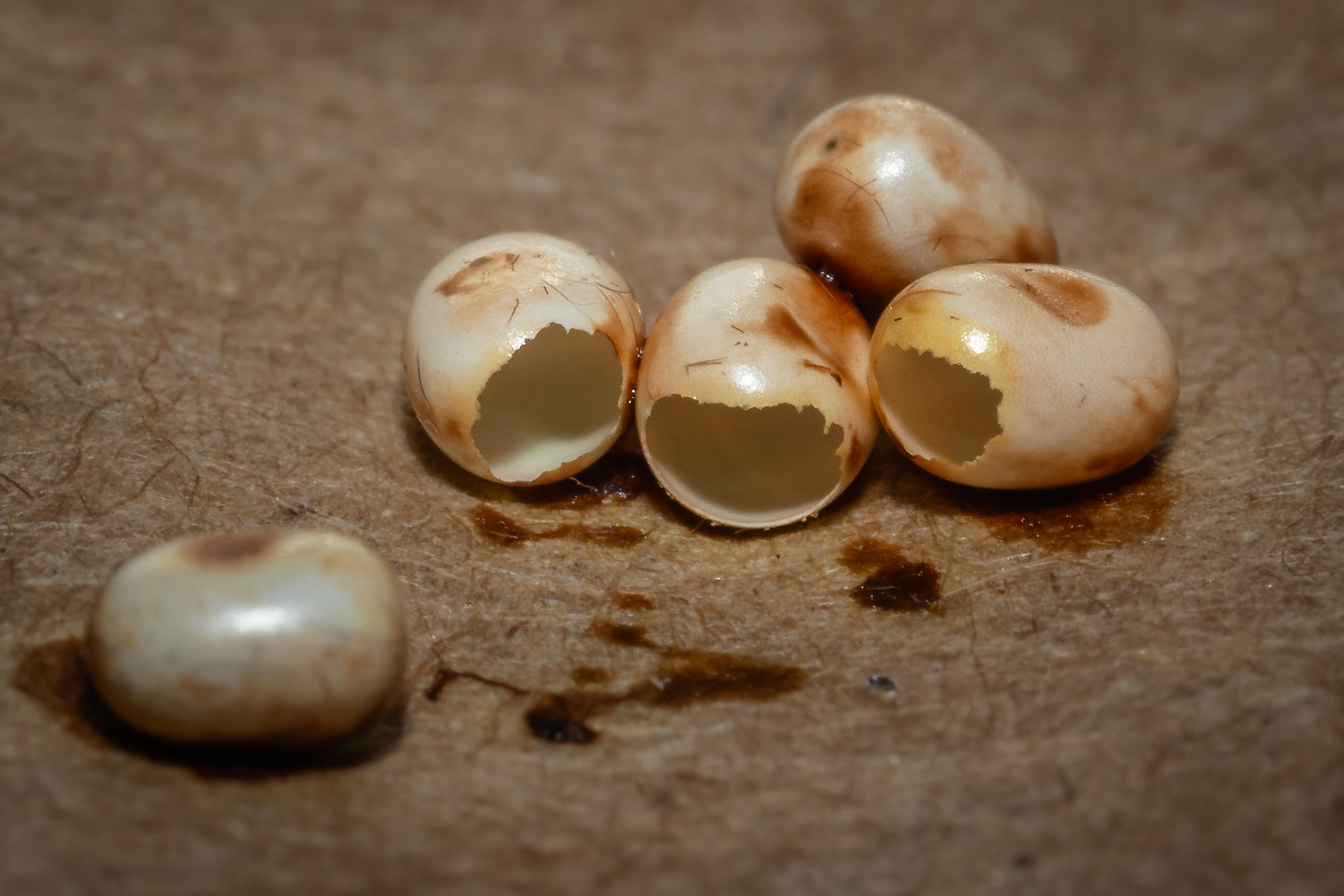
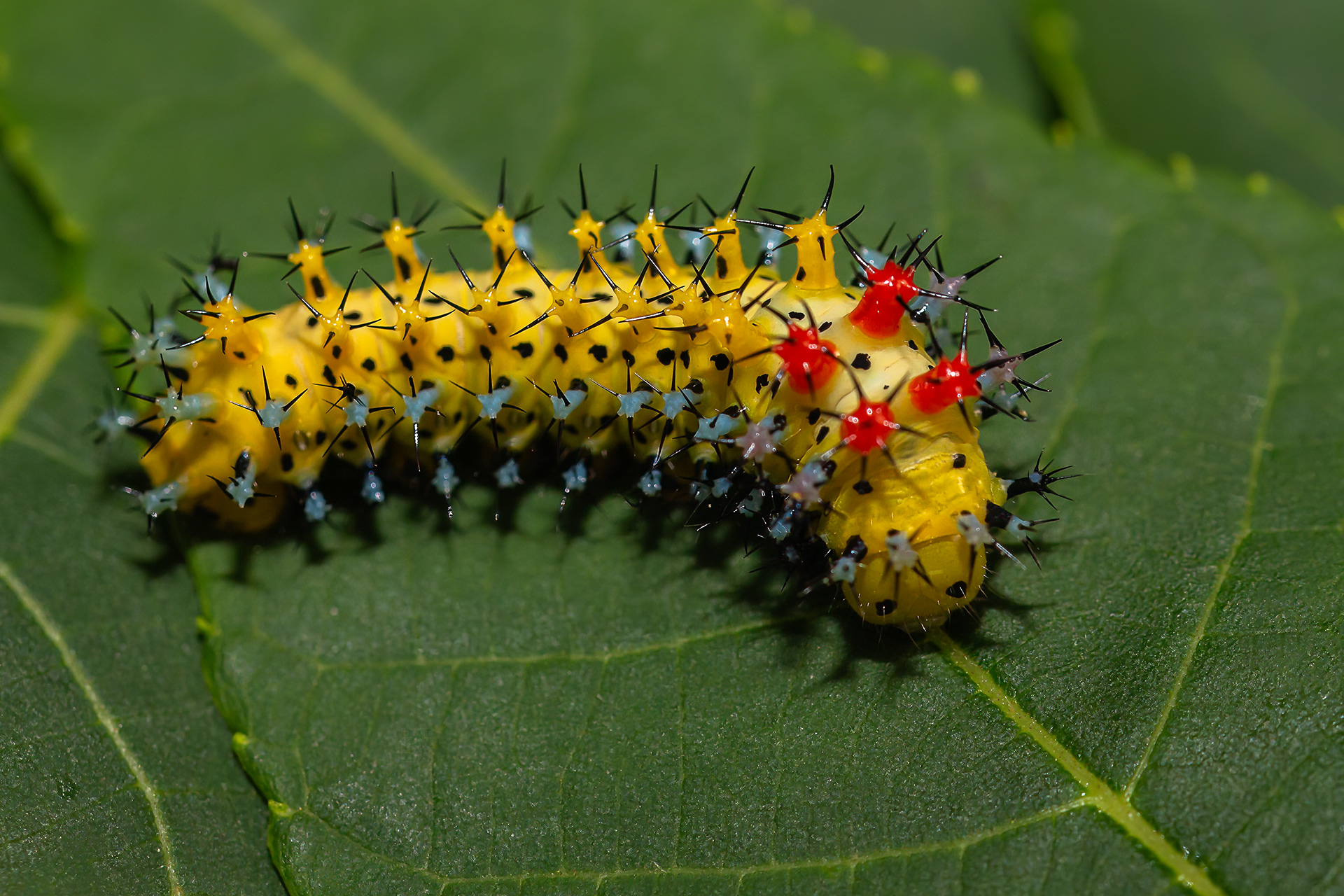
Instar 3 (late June):
• Bodies shift to pale green.
• Tubercles (colored bumps) start to show: orange near the head, yellow along the back, blue at the sides.
• Bodies shift to pale green.
• Tubercles (colored bumps) start to show: orange near the head, yellow along the back, blue at the sides.
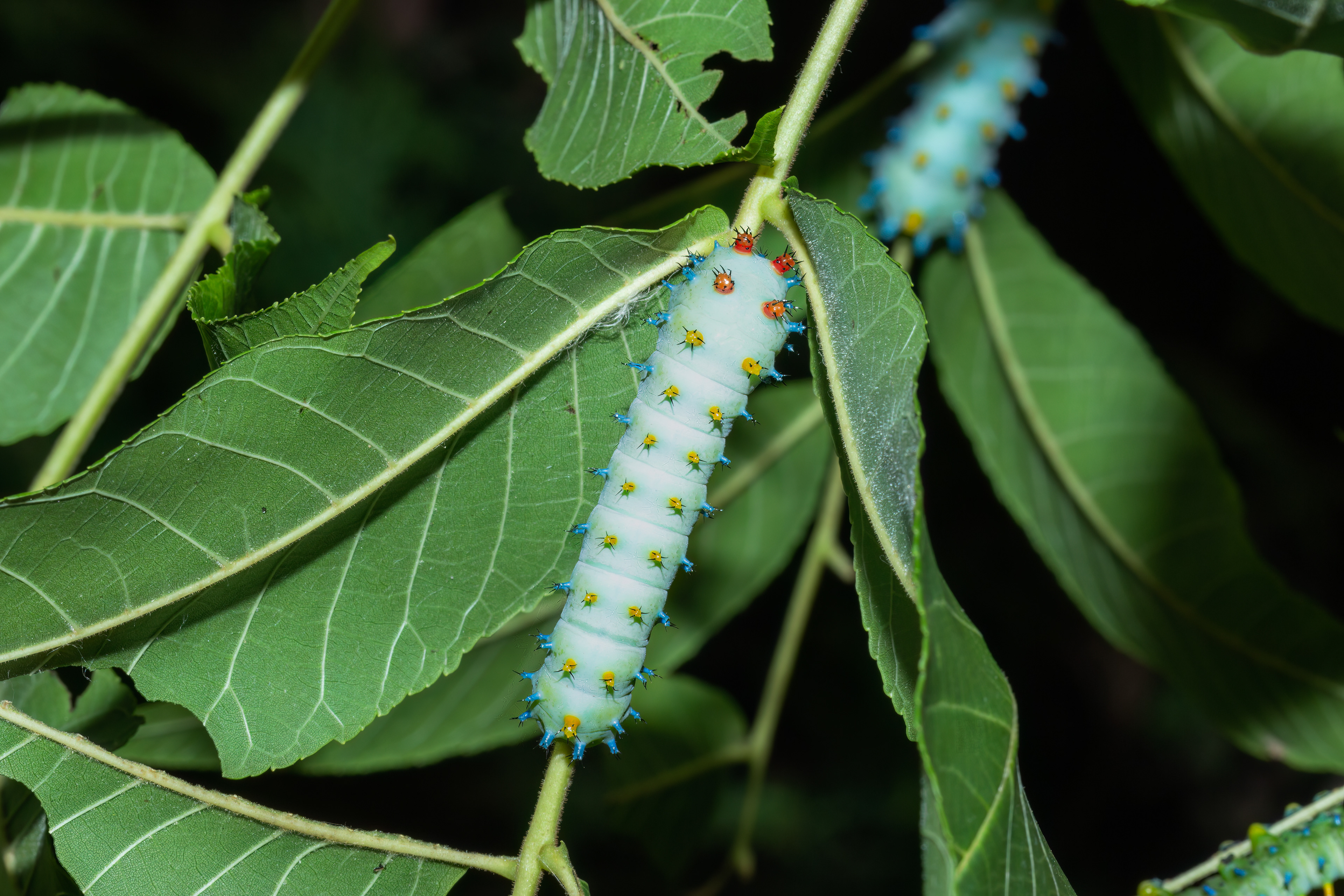
Instar 4 (July):
• Caterpillars become thicker, bright green, with fully developed tubercles.
• Feeding is heavy and leaves show noticeable damage.
• Caterpillars become thicker, bright green, with fully developed tubercles.
• Feeding is heavy and leaves show noticeable damage.
Instar 5 (late July–August):
• Caterpillars reach their largest size, up to 4 inches long.
• Tubercles are vivid and ornamental.
• By late summer, they stop feeding and spin their cocoons to overwinter.
• Caterpillars reach their largest size, up to 4 inches long.
• Tubercles are vivid and ornamental.
• By late summer, they stop feeding and spin their cocoons to overwinter.