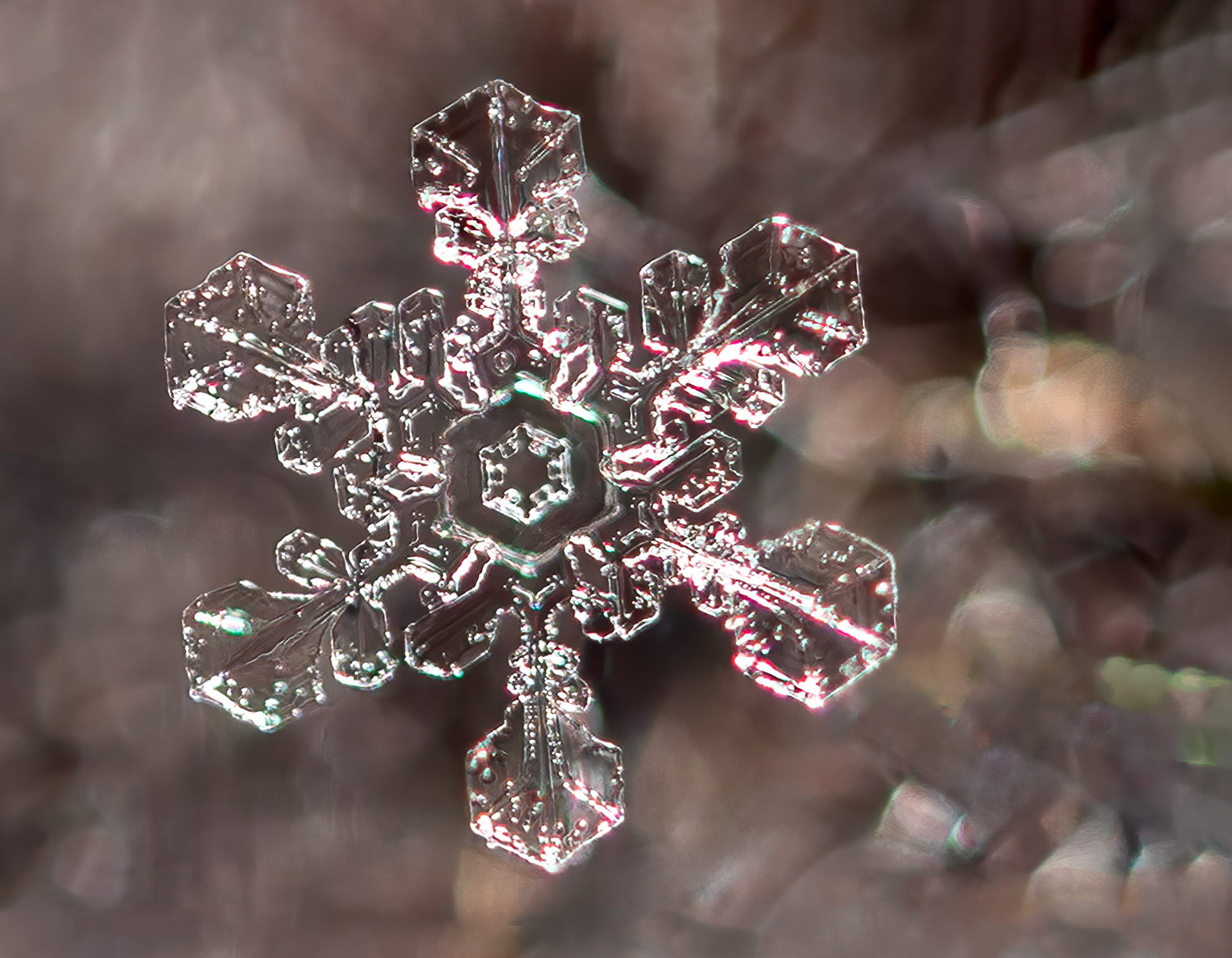
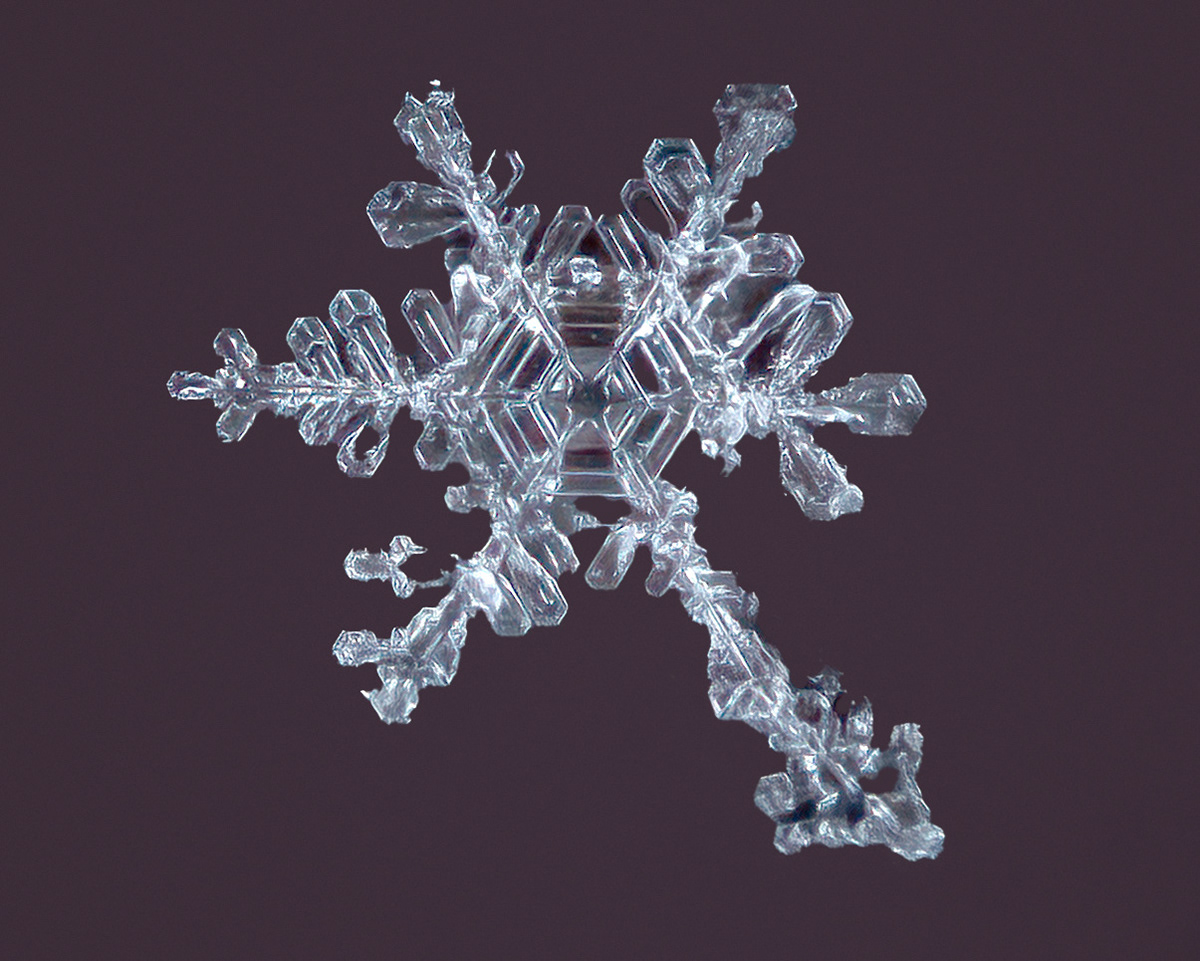
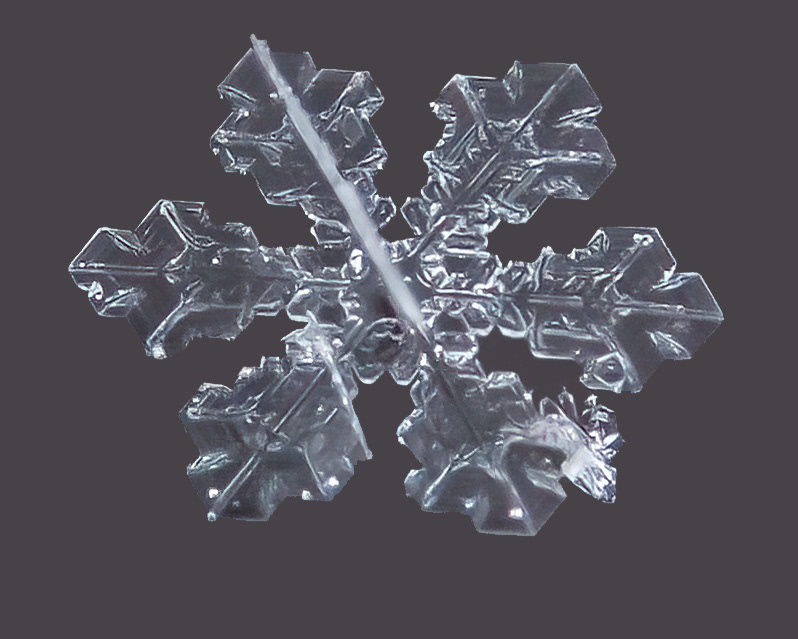
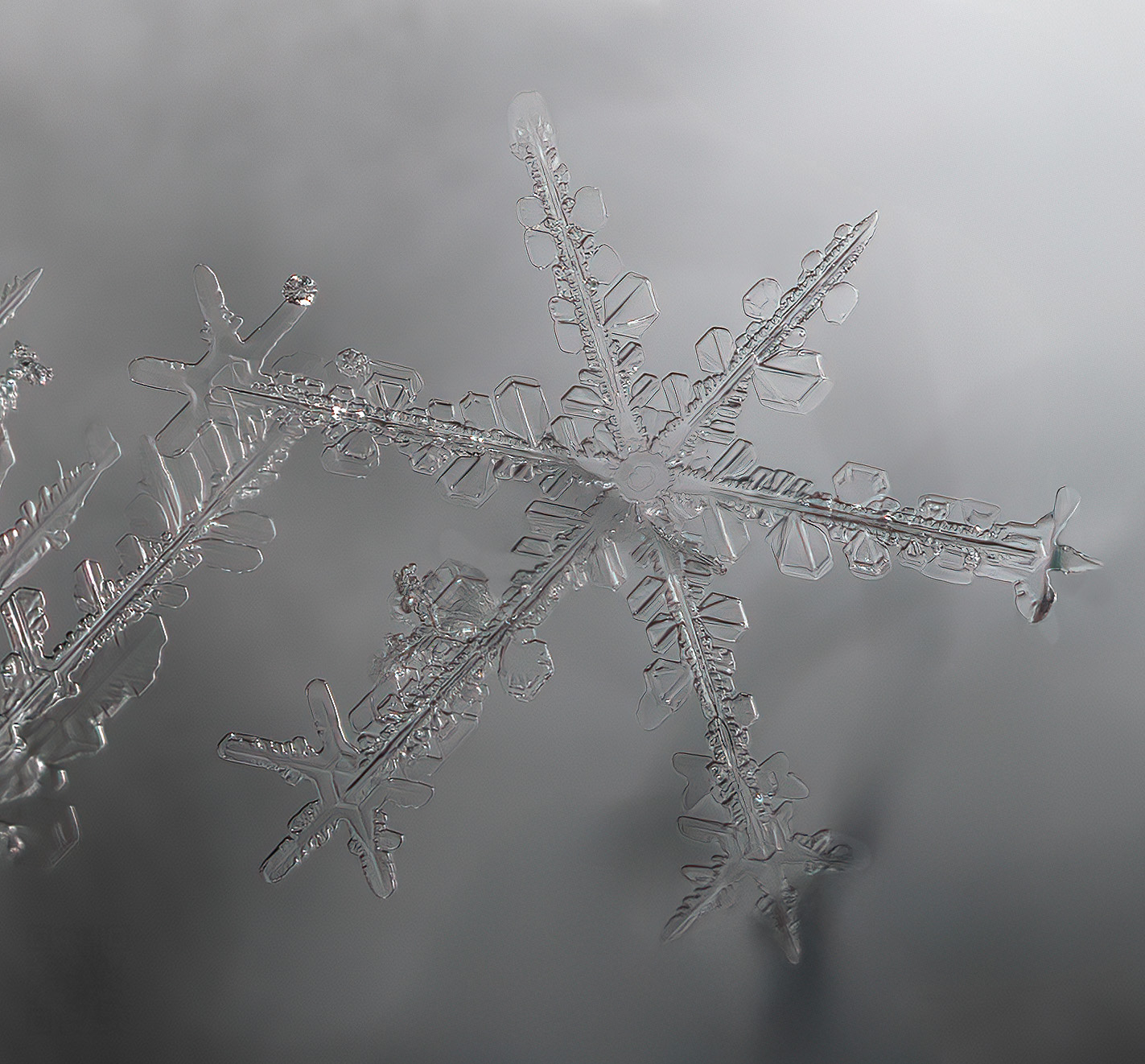
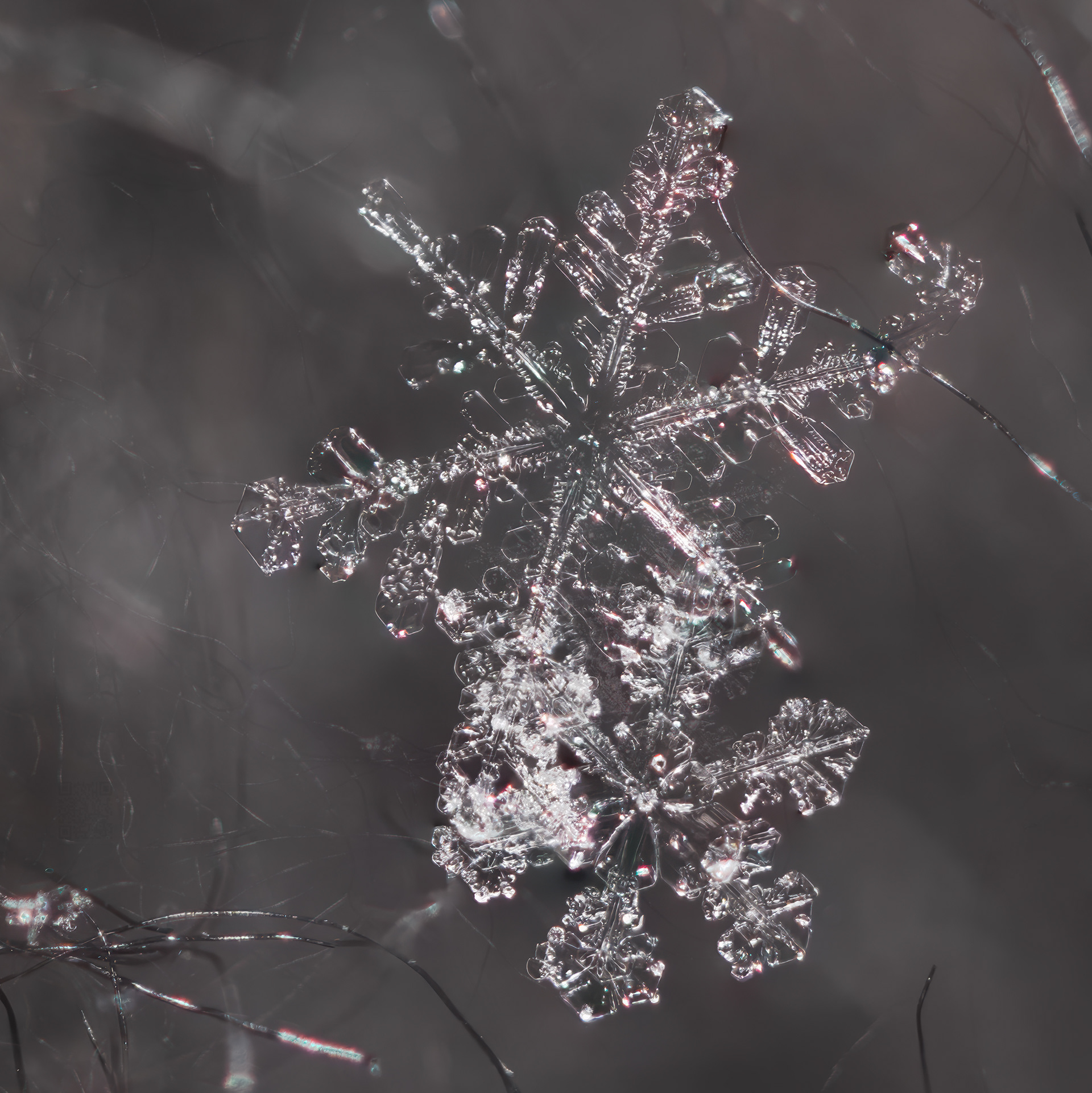
When the air hovers just below freezing, around -2°C to -5°C, snowflakes reveal their most intricate designs. They branch outward like tiny stars, each arm etched with detail, preserved by the cold and shaped by steady humidity. Calm air lets them drift down intact, fragile but complete.
Drop the temperature further, below -10°C, and the artistry fades. The flakes become simpler—needles, columns, or plates—small and sharp, born of drier air. They carry less decoration but remain precise in their geometry.
Near the freezing point, the story changes again. Flakes soften, edges blur, and they clump together. High humidity at this range makes them heavy, irregular, and quick to pack into dense snow.
Wind is the constant disruptor. Even the most delicate crystals can be shattered mid-descent, leaving fragments instead of full forms. Calm skies preserve beauty; turbulence strips it away.
Drop the temperature further, below -10°C, and the artistry fades. The flakes become simpler—needles, columns, or plates—small and sharp, born of drier air. They carry less decoration but remain precise in their geometry.
Near the freezing point, the story changes again. Flakes soften, edges blur, and they clump together. High humidity at this range makes them heavy, irregular, and quick to pack into dense snow.
Wind is the constant disruptor. Even the most delicate crystals can be shattered mid-descent, leaving fragments instead of full forms. Calm skies preserve beauty; turbulence strips it away.