Humpback whales migrate thousands of miles each year, traveling from warm tropical breeding grounds to Alaska’s cold, food-rich waters. They spend the summer in Alaska because its nutrient-dense seas provide the vast amounts of fish and krill they need to build fat reserves for the winter.
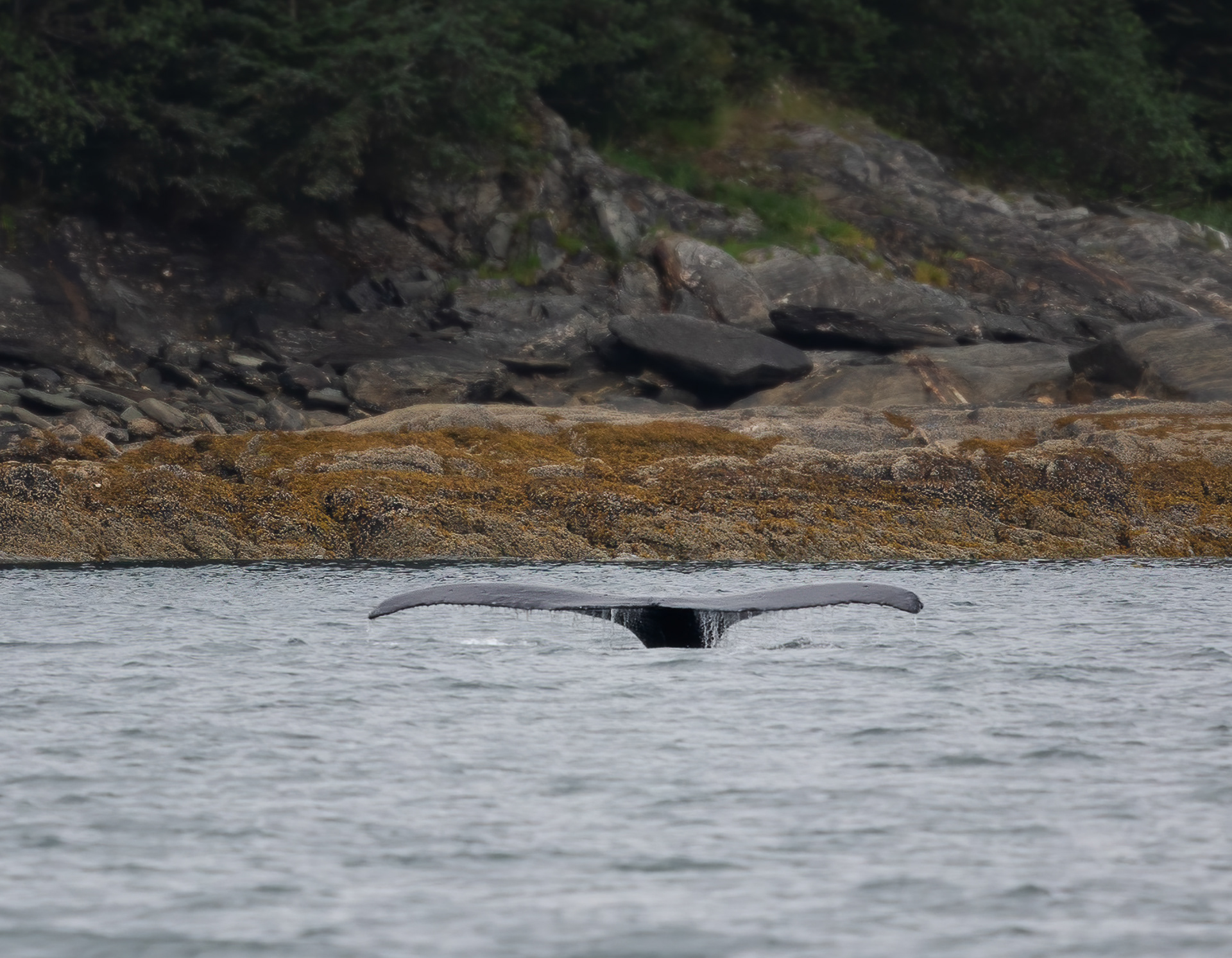
Alaska’s cold waters are packed with krill, herring, salmon, and other schooling fish. These species thrive in upwelling zones and glacial runoff areas, making Alaska one of the richest feeding grounds in the world.
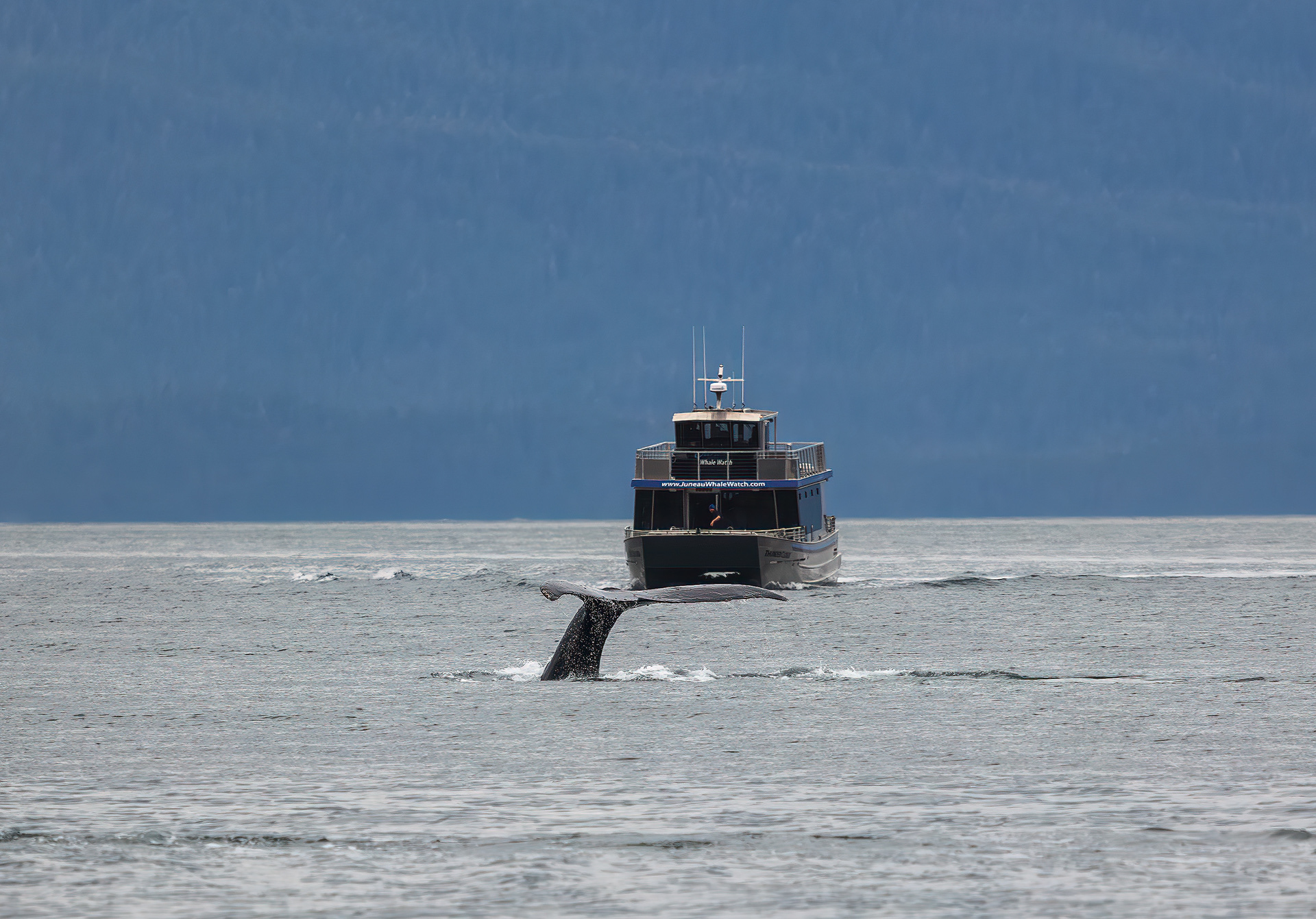
In their southern breeding grounds (Hawaii and Mexico), food is scarce, and whales do not eat at all during winter. The blubber reserves built in Alaska sustain them through the 6,000–8,000 km migration, as well as through mating, birthing, and nursing calves.
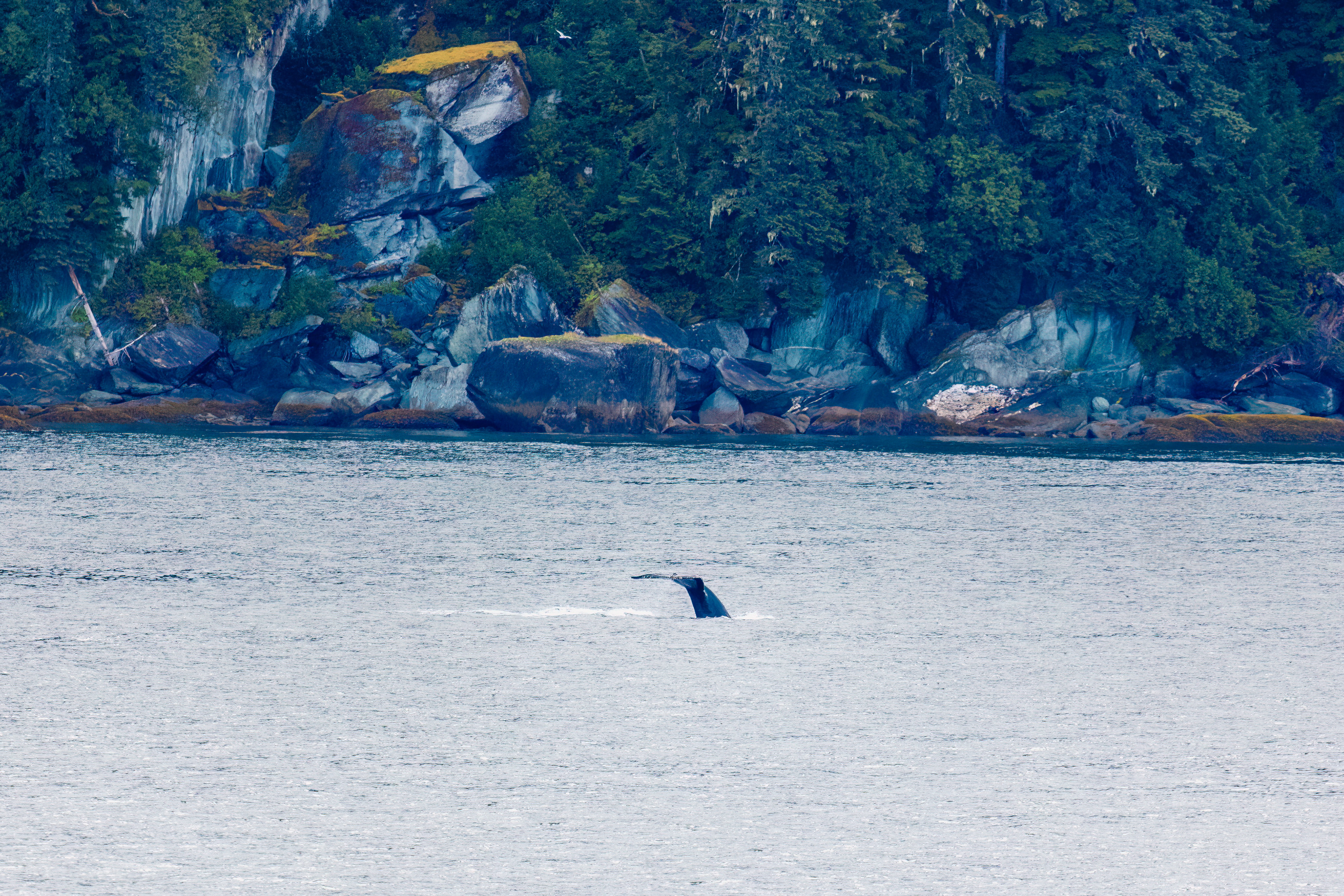
Young humpback whales often slap their tails (a behavior called lobtailing) repeatedly on the water’s surface as a way to practice communication, play, and learn social behaviors. Extended tail-slapping sessions are common among calves and juveniles, who imitate adults while also exploring their strength and coordination.