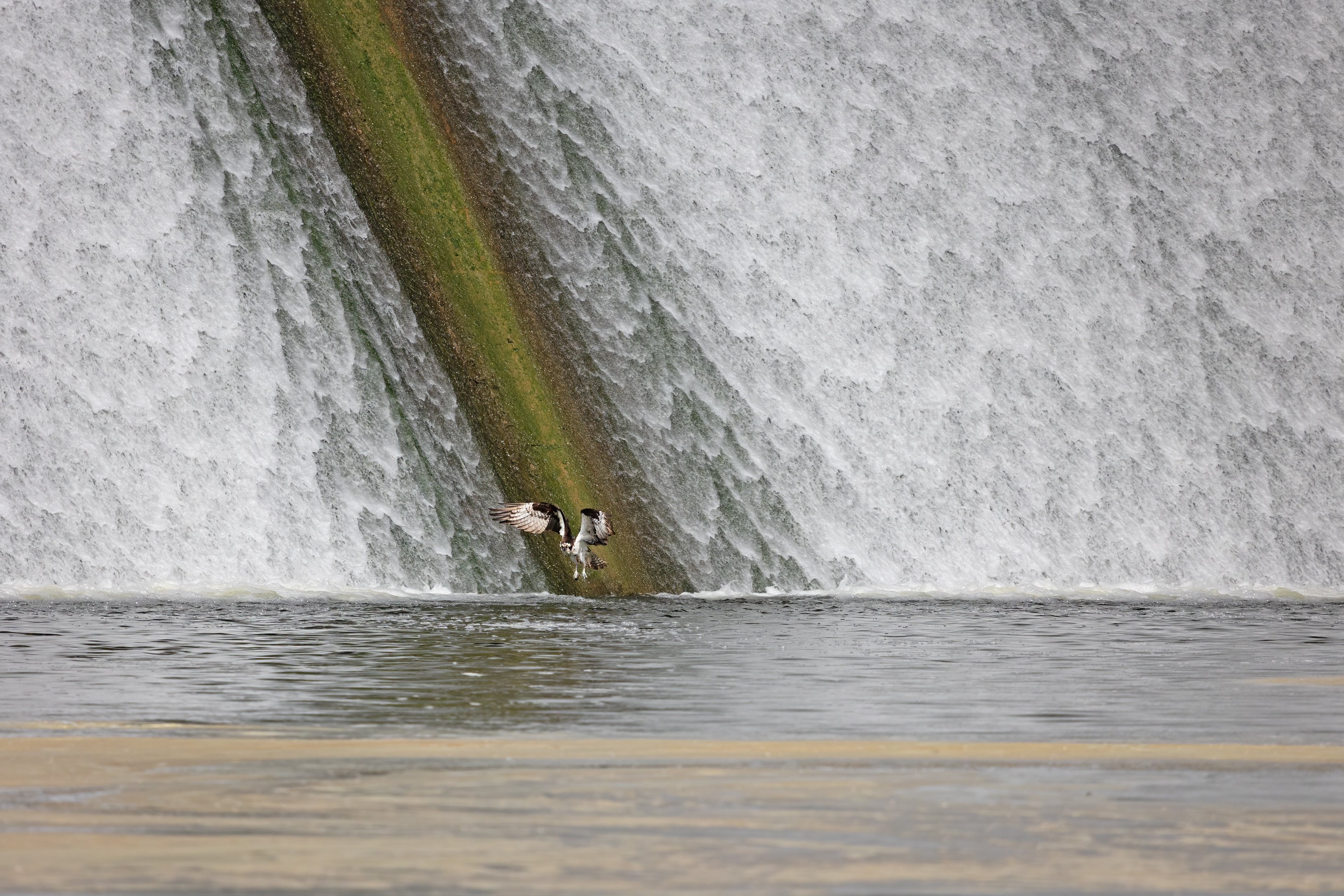
Spring migration is triggered by longer daylight and warming temperatures. Ospreys generally return to southwestern Ontario from March through April, with peak arrivals in early April. Males often arrive before females.
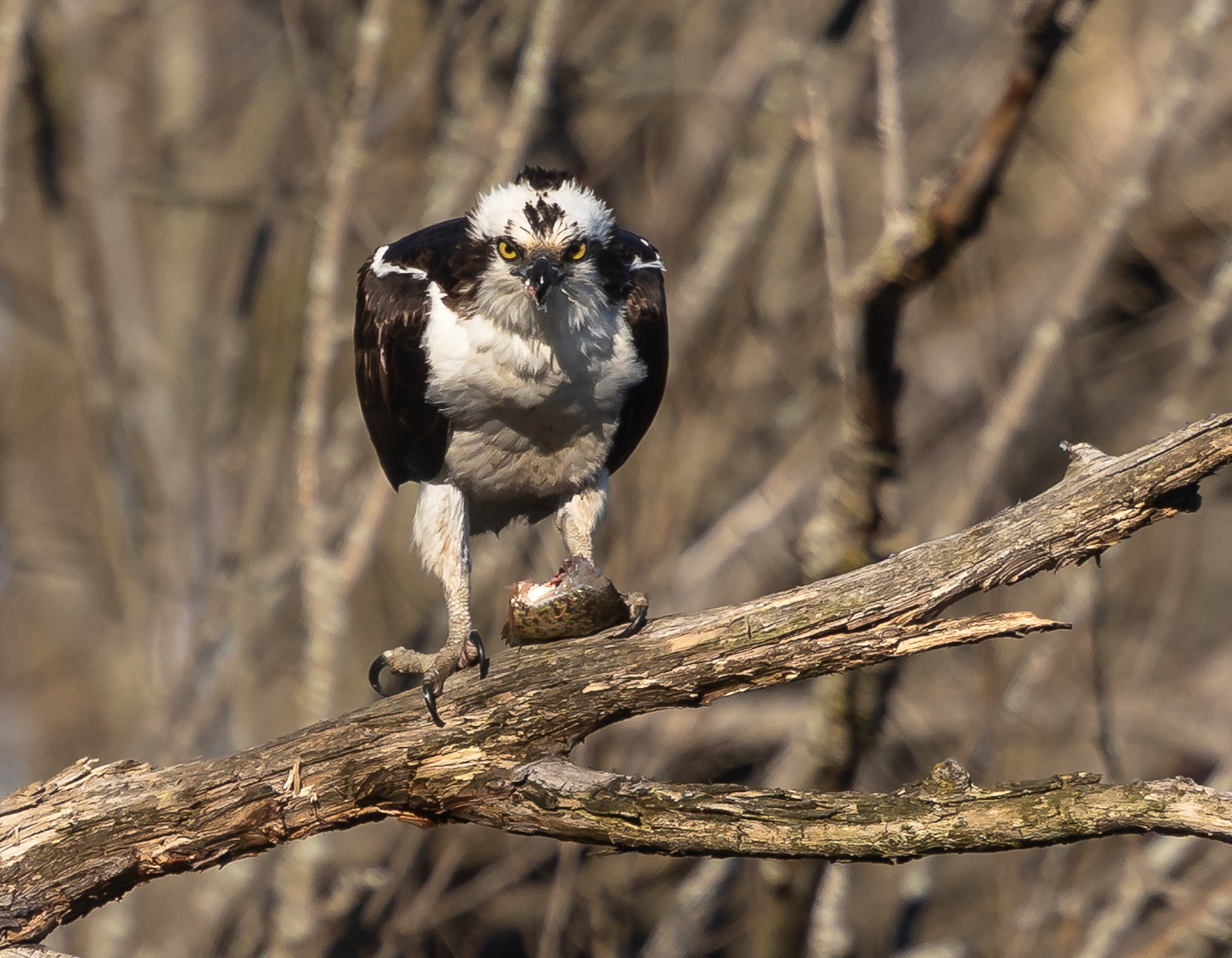
Once breeding begins, the male assumes the role of provider. His steady delivery of fish is vital to the survival of the chicks.
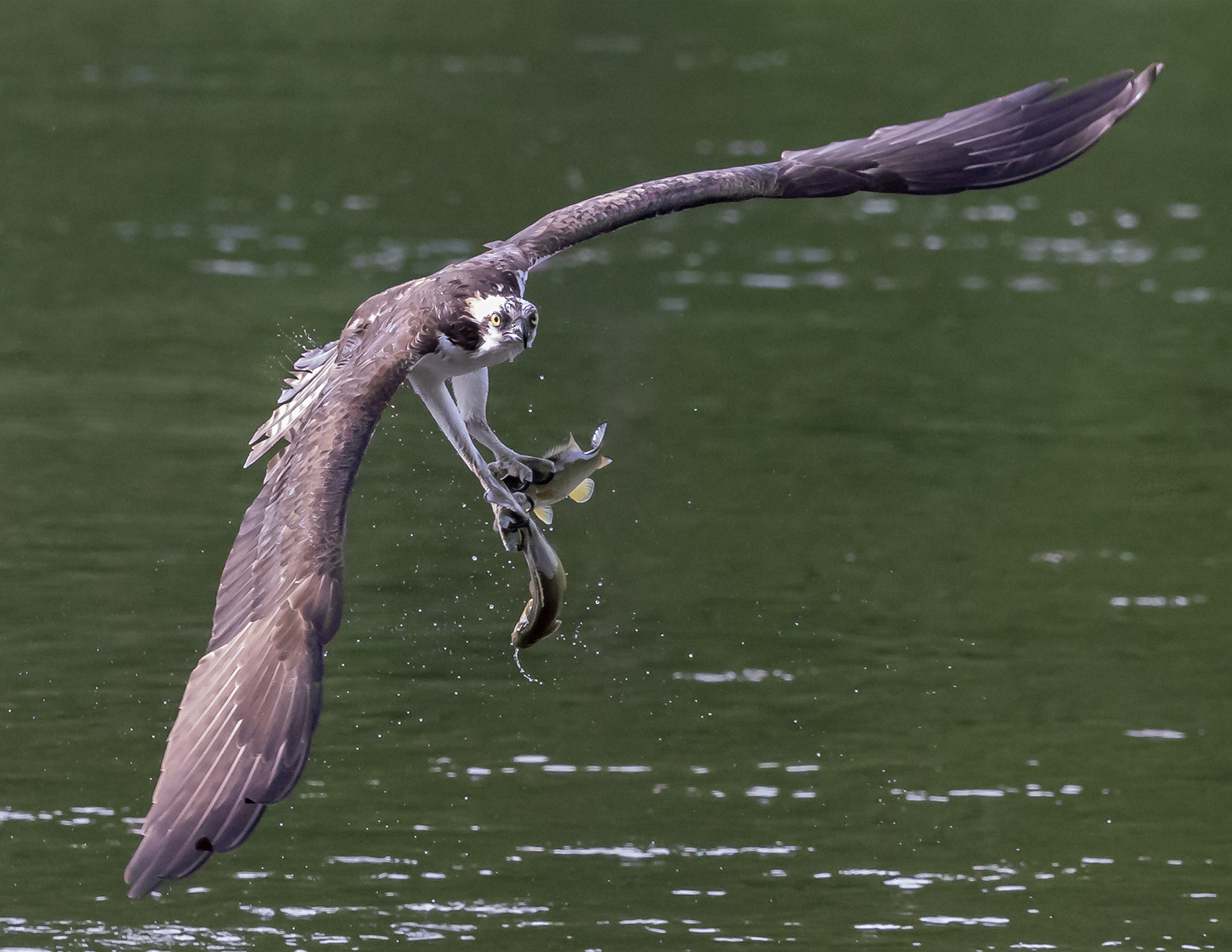
The male gathers most of the nesting material, grabbing sticks or lifting vegetation from the water’s surface. The nest is lined with soft layers of grass, sod, moss or algae, providing insulation and a cushioned bed for eggs and chicks.
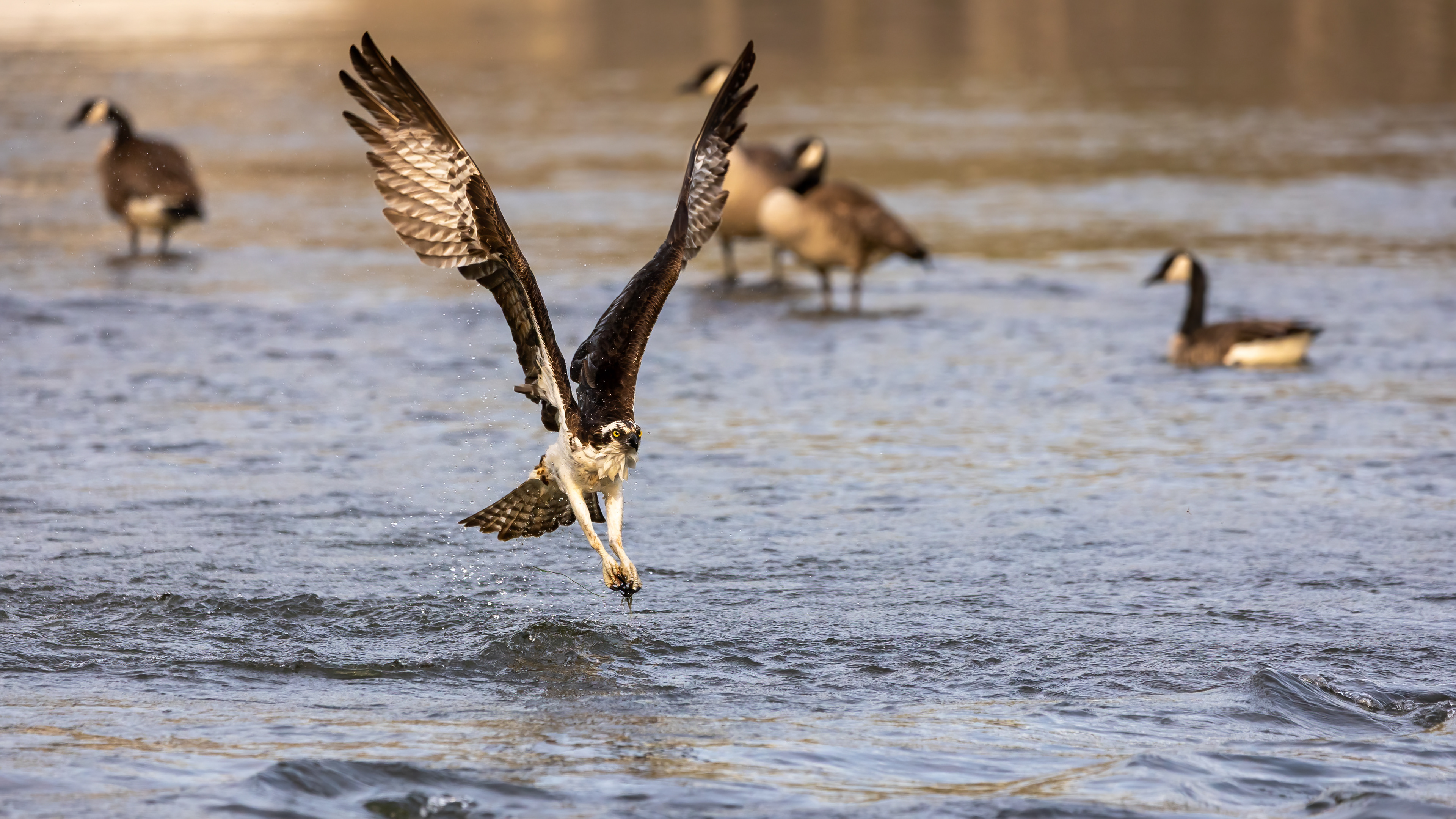
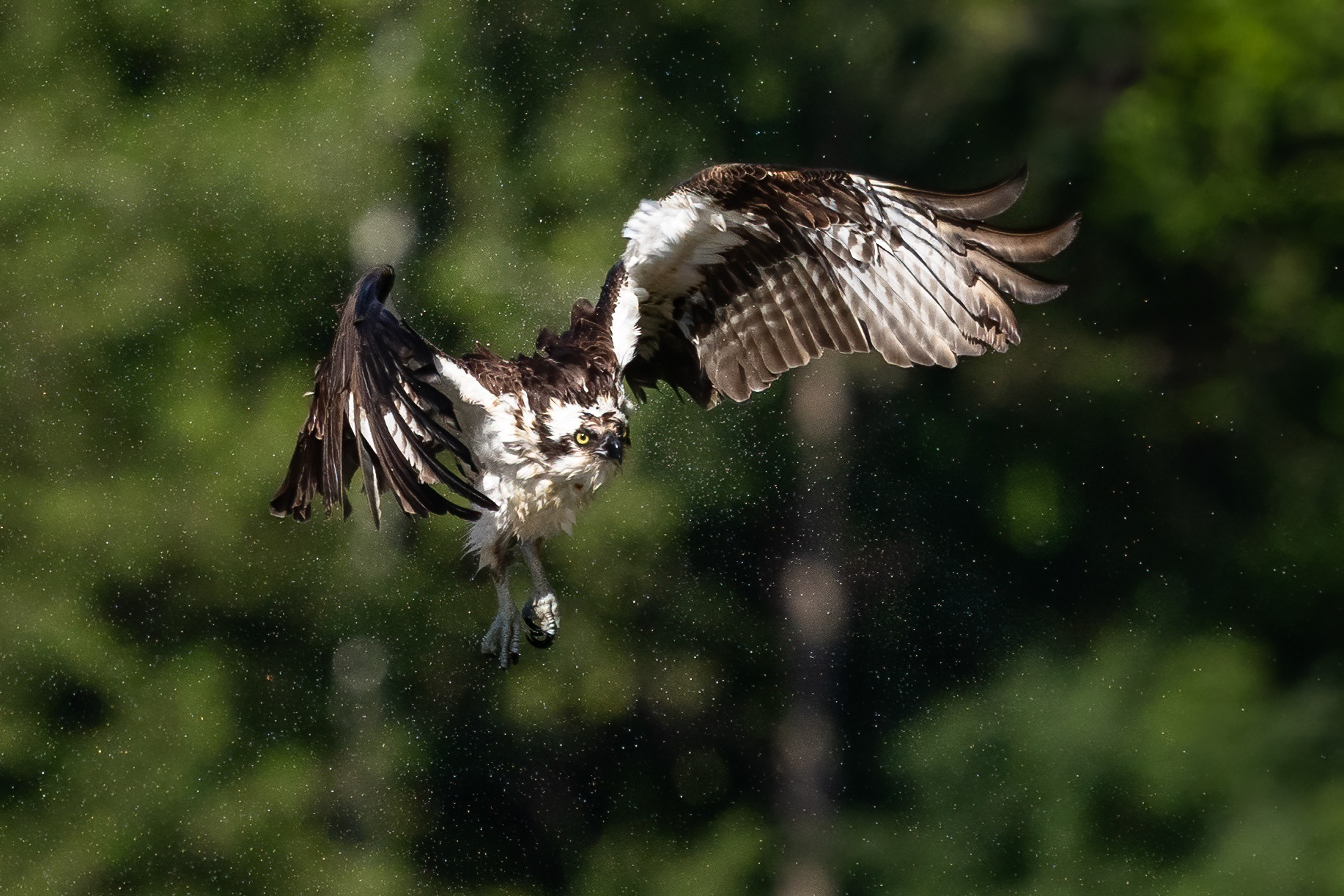
Ospreys lack fully waterproof feathers. After a dive, they rise from the water with a heavy shudder, shaking off droplets that cling to their plumage. This quick, violent motion lightens their load, reduces drag, and restores lift. Energy conserved in these moments is critical, especially when a fish is gripped tightly in their talons.
The shake is brief but unmistakable—an aerial tremor that marks the transition from hunter to carrier. Watching it is to glimpse the osprey’s precise balance between strength and efficiency, a ritual of survival written into every flight.
The shake is brief but unmistakable—an aerial tremor that marks the transition from hunter to carrier. Watching it is to glimpse the osprey’s precise balance between strength and efficiency, a ritual of survival written into every flight.
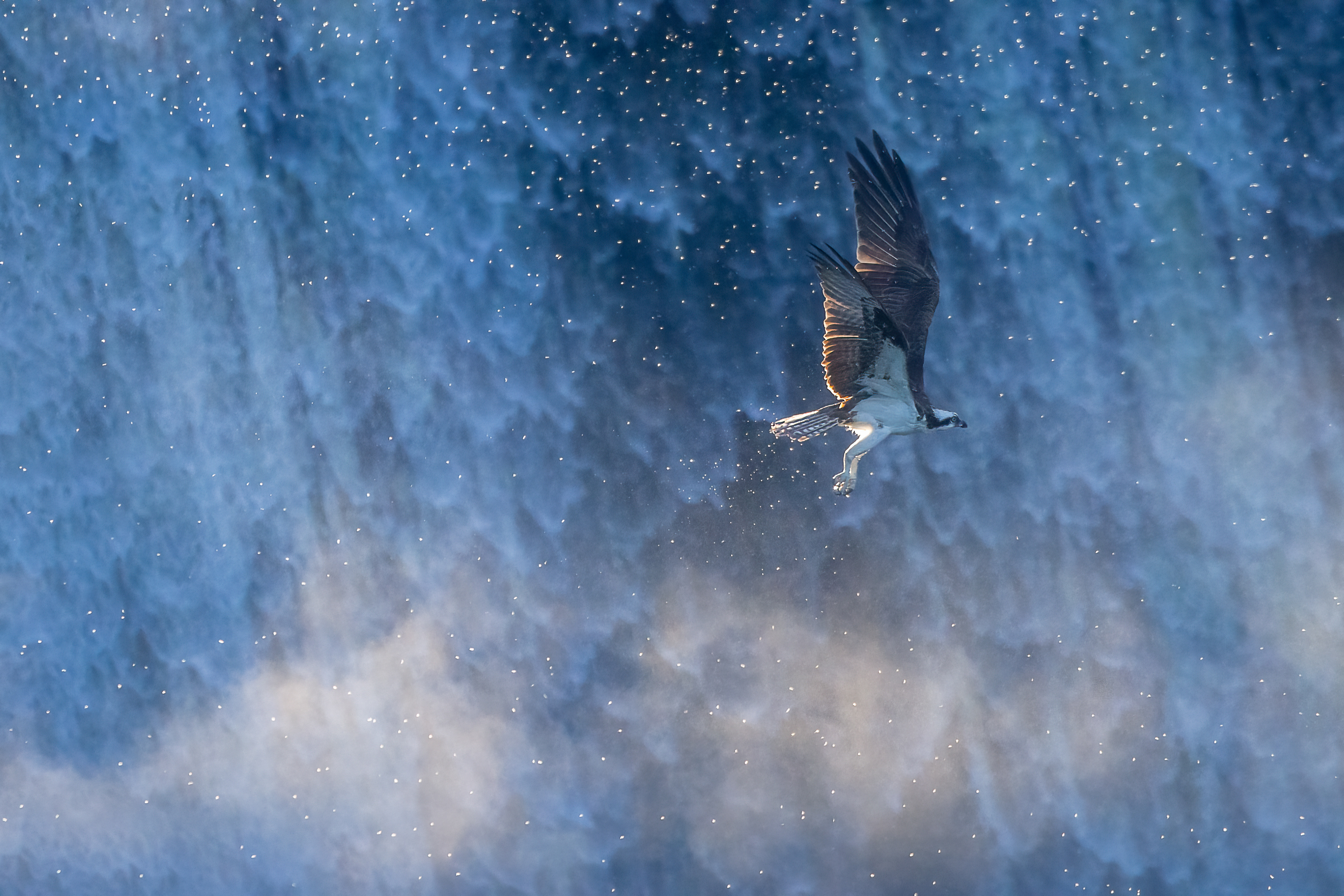
Osprey passing in front of the dam in the early morning mist.
The osprey fixes on its prey and angles downward. Wings draw in to reduce drag, guiding a controlled descent.
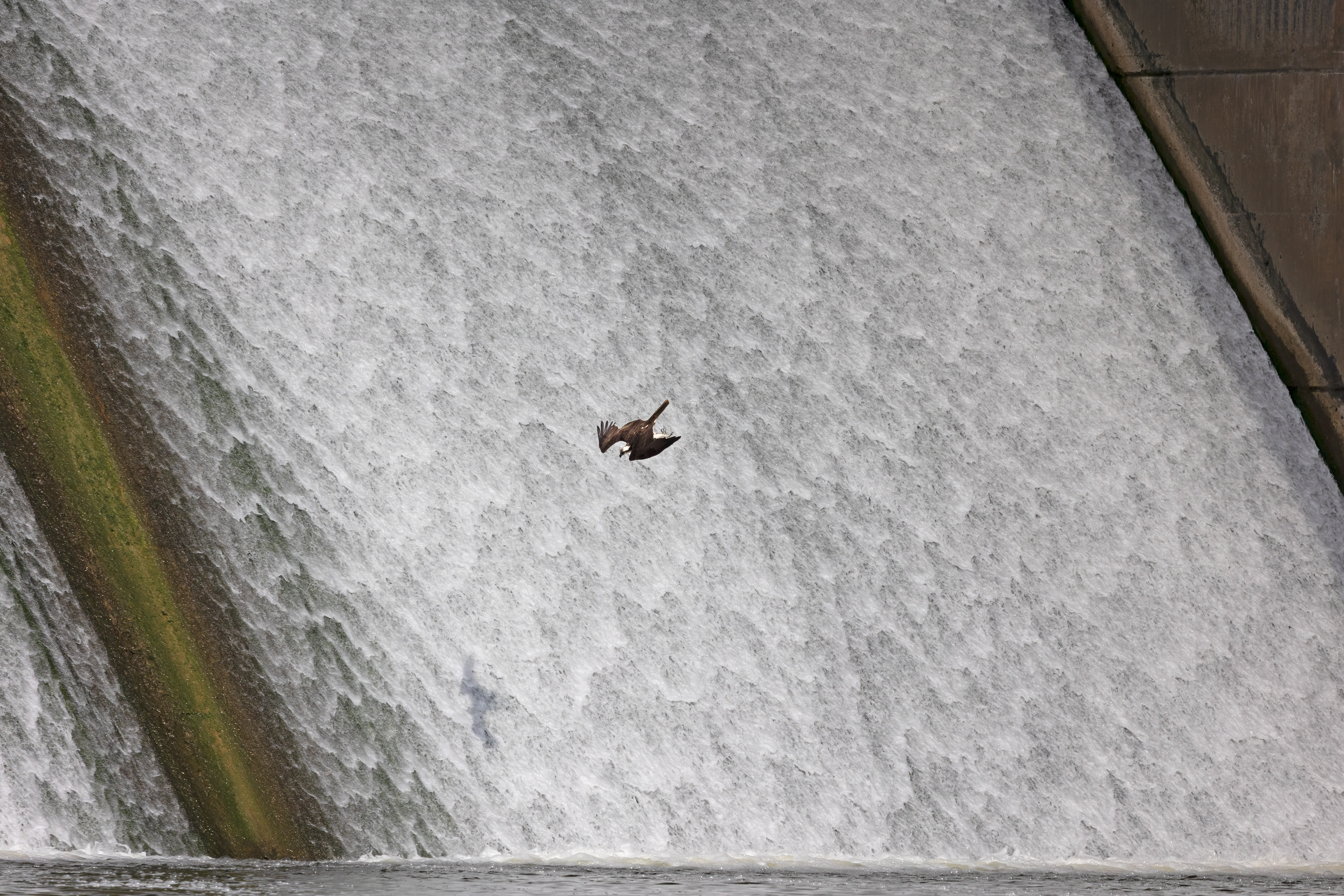
Ospreys typically succeed in catching fish on about 25–50% of their dives. This was not one of the successes.